
🍂 Fall Pest Control for Condominiums
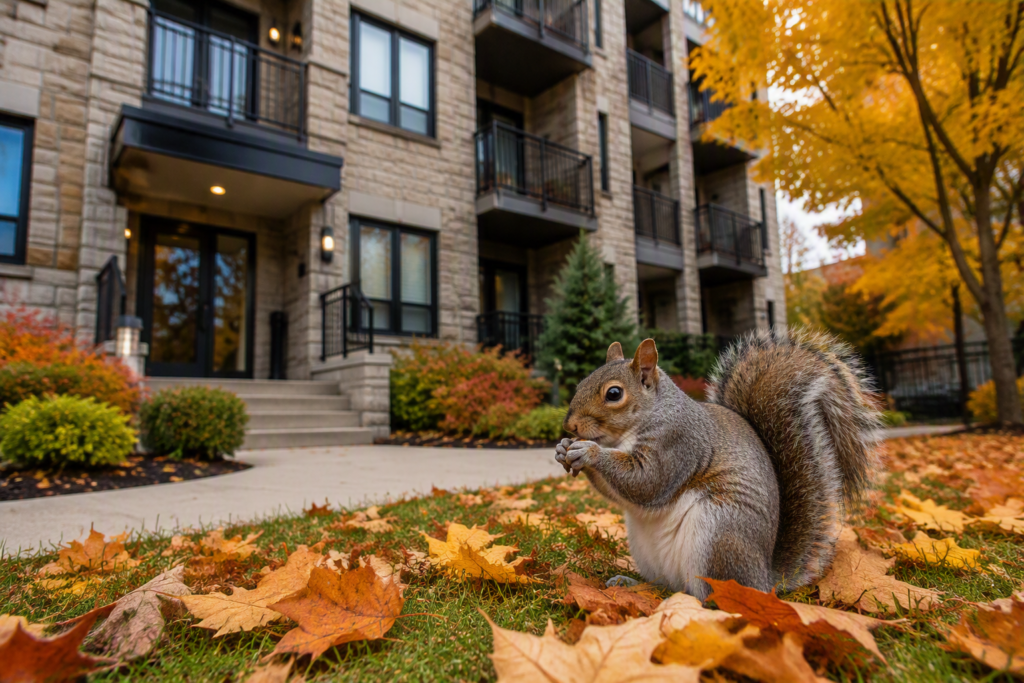
Balancing a Pest-Free Home with Humane Solutions
As temperatures begin to drop, many pests and wildlife start looking for warm places to spend the winter. Whether you live in a high-rise condominium, townhouse community, or vacant land condominium, fall is the perfect time to take preventive action.
The good news? Most pest problems can be avoided through simple maintenance and humane exclusion methods that keep animals and insects outside where they belong.
🐭 Why Fall Is Prime Pest Season
As outdoor food becomes scarce and temperatures cool, pests begin seeking:
- Warm shelter
- Water sources
- Food supplies
- Safe nesting locations
Common fall visitors include:
- 🐭 Mice
- 🐀 Rats
- 🐜 Ants
- 🪳 Cockroaches
- 🕷️ Spiders
- 🐦 Nesting birds
- 🐿️ Squirrels
- 🦝 Raccoons
In condominium communities, one small entry point can sometimes affect multiple homes or units.
🛡️ Prevention Is the Best Pest Control
🍽️ Keep Food Sources Secure
Pests love easy meals.
✅ Store dry goods in sealed containers
✅ Clean up crumbs promptly
✅ Secure garbage and recycling
✅ Avoid leaving pet food out overnight
💧 Reduce Moisture
Many pests need water to survive.
Check for:
- Leaking faucets 🚰
- Plumbing leaks 🔧
- Condensation around windows 🪟
- Standing water on balconies 🌧️
🚪 Seal Entry Points
A mouse can squeeze through surprisingly small openings.
Inspect:
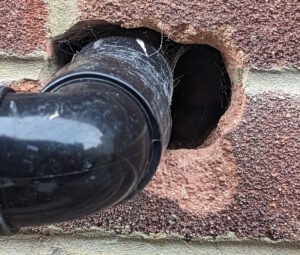
✅ Gaps around utility pipes
✅ Weather stripping around doors
✅ Damaged screens
✅ Cracks in foundations or walls
If you notice deficiencies affecting common elements, report them to management.
🌳 Maintain Outdoor Areas
Townhouse and vacant land owners should:
✅ Trim shrubs away from buildings
✅ Store firewood away from foundations
✅ Remove fallen fruit and nuts
✅ Keep garages organized
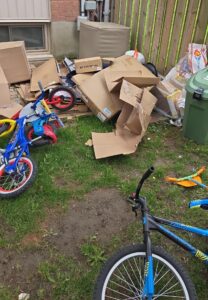
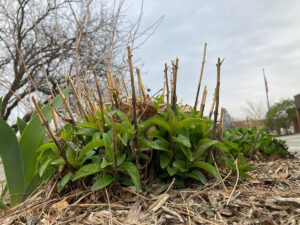
Don’t let your backyard look like this… and report if you see someone else’s get bad. Timely intervention can prevent a multi-unit issue.
❤️ Humane Exclusion: The Preferred First Step
The most effective long-term pest control strategy is exclusion. Rather than removing animals after they’ve entered, exclusion prevents access altogether.
Humane solutions include:
🚪 Maintaining or installing door sweeps
🪟 Repairing screens
🔩 Sealing gaps and holes
🌳 Trimming tree branches from roofs
🗑️ Wildlife-resistant waste containers
🔲 Screening vents and openings
These methods solve the root cause while minimizing harm to wildlife.
See our next blog post for some more helpful tips on Humane Exclusion.
⚖️ When Lethal Control May Be Necessary
Humane prevention should be the first approach whenever possible. However, there may be circumstances where a licensed pest control professional recommends more aggressive measures.
Examples include:
- Significant rodent infestations
- Public health concerns
- Structural damage
- Situations where exclusion alone is ineffective
The goal should always be to use the least harmful, most effective solution available.
Balcony Pest Control: Small Habits Make a Big Difference
Balconies, patios, and terraces can unintentionally attract pests and wildlife.
🧹 Keep Balconies Clean and Clutter-Free
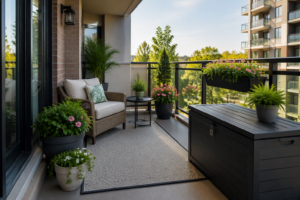
Balconies can provide shelter for insects and rodents.
✅ Sweep regularly
✅ Remove leaves and debris
✅ Keep storage bins sealed
✅ Avoid storing cardboard boxes outdoors
✅ Empty standing water from planters
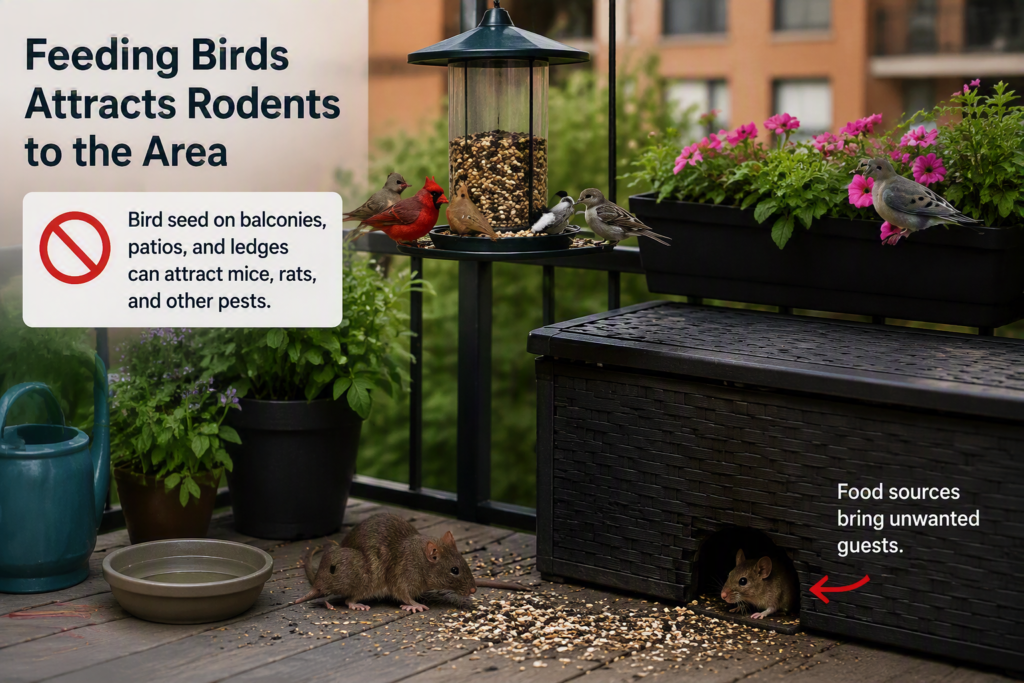
🐦 Think Twice About Feeding Birds
While feeding birds may seem harmless, it often creates unintended consequences.
Bird seed can attract:
🐦 Pigeons
🐿️ Squirrels
🐭 Mice
🐀 Rats
Food that falls onto lower balconies, gardens, or common areas can quickly become a pest issue.
🌺 Manage Plants Carefully
Balcony gardens are beautiful but can provide hiding spots for pests.
Helpful tips:
🌱 Inspect plants regularly
💧 Avoid overwatering
🪴 Check pots before bringing plants indoors
⬆️ Use elevated planters where possible
🐦 Prevent Nesting Activity
Watch for:
🪹 Nesting materials in corners
🐦 Repeat visits to the same location
📦 Hidden spaces behind furniture or storage bins
Early action can prevent a larger problem later.
🍔 Keep BBQs Clean
Food residue attracts pests.
After cooking:
✅ Clean grates
✅ Empty grease trays
✅ Store supplies securely
✅ Follow condominium rules
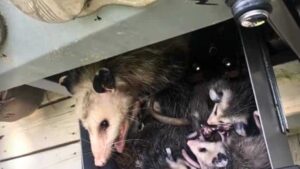
Click image to see YouTube video
🚫 Don’t Feed Wildlife
Wildlife that becomes dependent on people often develops nuisance behaviours.
Avoid feeding:
🐿️ Squirrels
🦝 Raccoons
🐦 Birds
🦆 Waterfowl
A truly humane approach is helping wildlife remain wild.
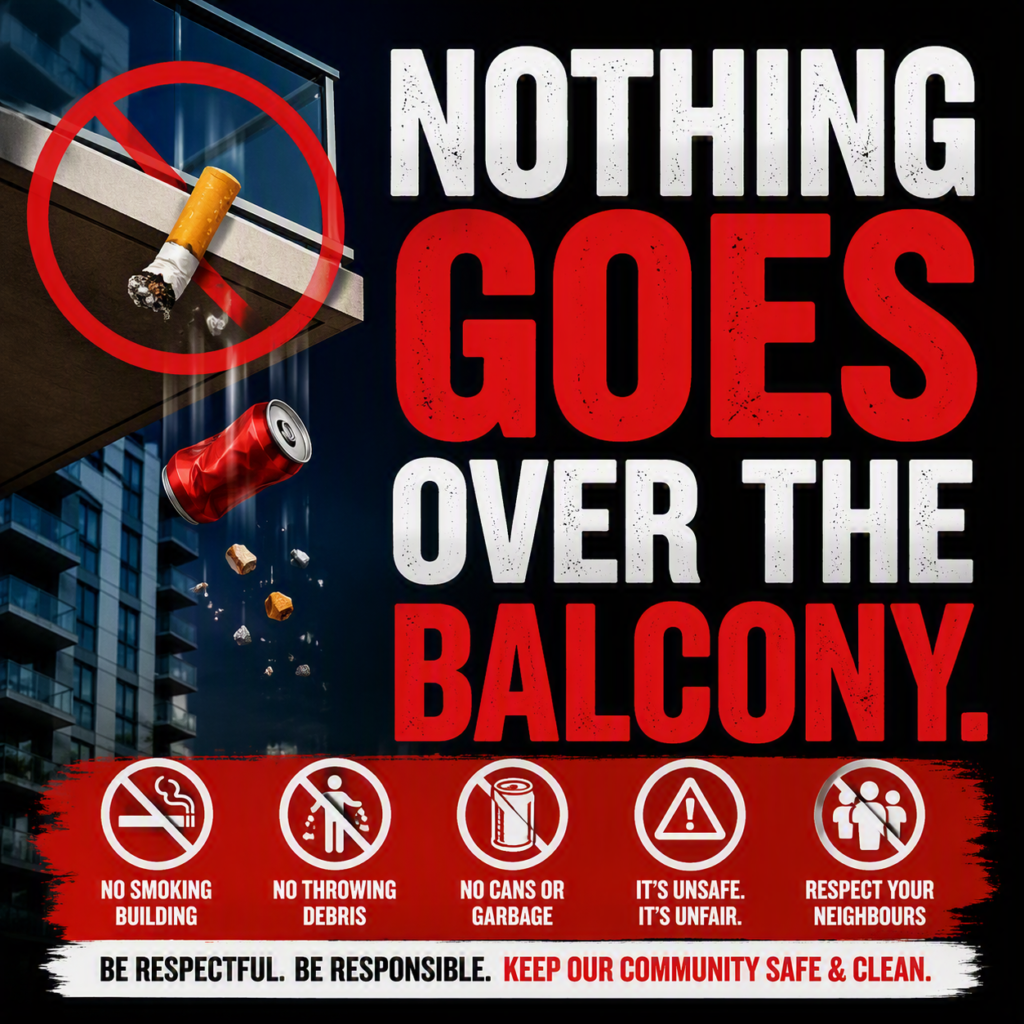
⚠️ Nothing Goes Over the Balcony
Throwing or dropping items from balconies creates safety and pest concerns.
This includes:
🚭 Cigarette butts
🍟 Food scraps
🥤 Beverage containers
🗑️ Garbage
🌻 Bird seed
Debris can attract pests, damage property, and create hazards for residents below.
Remember: Nothing Goes Over the Balcony. Ever.
✅ Fall Balcony Pest Control Checklist
☐ Remove food and crumbs after meals
☐ Empty standing water regularly
☐ Keep storage bins sealed
☐ Inspect plants for insects
☐ Avoid feeding birds and wildlife
☐ Report pest activity promptly
☐ Follow condominium rules
☐ Keep balcony areas clean and uncluttered
This is part of a seasonal change, that includes inside and outside. Fall into a cozy fall with more tips in last year’s blog post about prepping for fall
🏡 A Community Effort
A pest-free condominium and humane treatment of wildlife can go hand in hand. By focusing on prevention, maintenance, and exclusion first, owners can help create cleaner, healthier, and safer communities for everyone.
🍁 This fall, take a few simple steps today to help prevent pest problems tomorrow.
Remember: The best pest control isn’t removal. It’s prevention. 🐭🚫🏠
See our follow up post on more Eco-friendly ways to keep pests out.
Not ready to talk about fall pest control? Check out our summer pest control blog!